Graph Theory is an essential theoretical and practical pillar for modeling and problem-solving across numerous domains. Its effectiveness relies on graphic simplicity, its relevance for distributed aspects, and the fundamental concepts of traversal and pathfinding.
The objective of this course is twofold:
Firstly, to teach the student how to model concrete solutions in the form of a graph.
Secondly, to present a range of techniques and algorithms (such as minimal path search, maximum flow, etc.) to efficiently solve these problems
- Teacher: NADIA GUERROUI
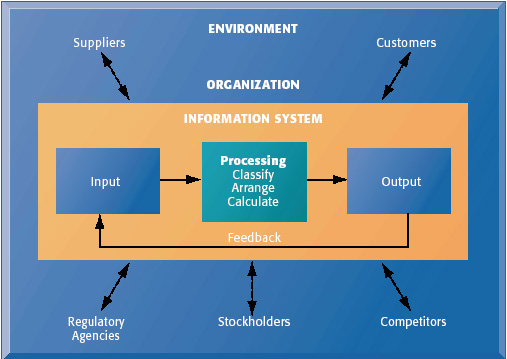
The objective of this module is to present the role and importance of Information Systems (IS) in organizations, while enabling students to acquire the fundamental skills required for the analysis and design of management information systems.
The module begins with an overview of organizational and functional structures of the enterprise, followed by the study of the properties and role of information, as well as techniques for its codification and control. Subsequently, methodological tools and approaches for the analysis and design of information systems will be introduced.
After completing this course, students will be able to:
· Apply their understanding of Information Systems to solve business-related problems.
· Analyze, decompose, model, and implement a business project by approaching it as an Information System problem to be solved.
- Teacher: ALI KHEBIZI
Teaching objectives: Formalization of human reasoning
- Teacher: MOURAD HADJERIS
Course Objectives
The MIPS architecture is an excellent choice for teaching RISC architecture concepts. Thanks to its simplicity, clear structure, and the availability of educational simulators like MARS, MIPS allows students to develop a solid understanding of processors and instruction sets.
Towards the end of this course, students should be able to:
· - Describe the instruction set architecture of a MIPS processor
· - Analyze, write, and test MIPS assembly language programs
· - Describe the organization/operation of integer and floating-point arithmetic units
· - Design the datapath and control of a single-cycle processor
· - Design the datapath and control of a pipelined processor and handle hazards
· - Describe the organization/operation of memory and caches
· - Analyze the performance of processors and caches
- Teacher: CHEMSEDDINE CHOHRA

This module will enable students to develop some fundamental algorithms in computer science and, additionally, to work with more advanced data structures.
- Teacher: ADEL BENAMIRA