
TCE in English is a course designed to develop students’ English communication skills in the context of agronomy and agricultural sciences. It focuses on scientific vocabulary, the study of scientific texts, and oral and written communication in academic and professional contexts.
Course Objectives
By the end of the course, students should be able to:
- Understand and use common scientific and technical terminology related to agronomy.
- Read, analyze, and communicate information from scientific texts.
- Develop effective oral and written communication skills using appropriate academic and digital tools.
- Dr.: dounya zad oumeddour
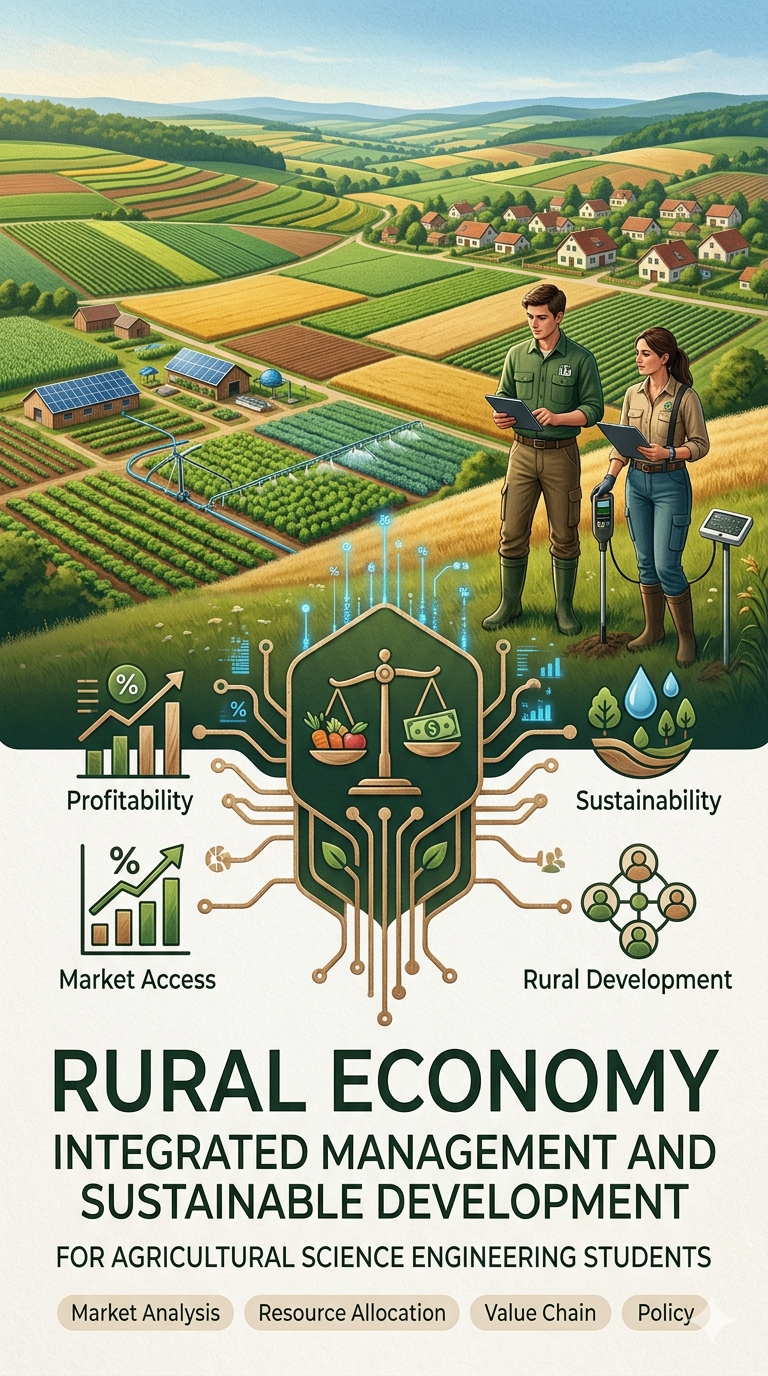
Rural economics represents a strategic pillar that transforms agricultural technical sciences from mere farming practices into successful and sustainable investment systems. It is the discipline that provides the agricultural engineer with analytical tools to manage limited natural and human resources efficiently, in order to reach the optimal level of production.
The importance of this field is not limited to understanding market mechanisms and prices; it also extends to shaping development perspectives in rural areas and linking the different stages of value chains together.
Mastering the principles of rural economics enables the engineer to balance the economic viability of projects with national food security, making him a key actor in the modernization of the rural sector in the context of current global challenges.
- المعلم: OUARET HEMZA
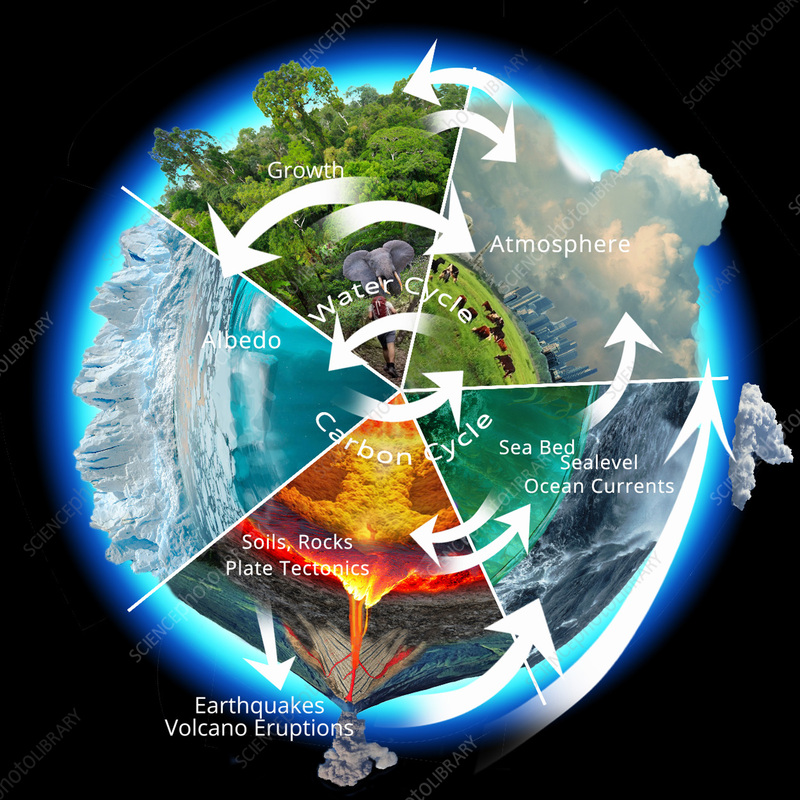
The Earth is composed of a solid core and a lithosphere, covered by two fluid envelopes essential for life: the hydrosphere (liquid water) and the atmosphere (gaseous layer). Meteorology is the science that studies short-term atmospheric phenomena such as temperature, pressure, wind, cloudiness, and precipitation, and aims to predict them to better understand their effects on daily life.
Understanding meteorological data and climate is especially important in agriculture. It helps characterize the climatic conditions of a region and analyze their effects on crop growth, development, and yield. Some studies establish statistical relationships between climatic parameters and agricultural performance to optimize farming practices and anticipate risks.
Finally, climate refers to the average state of the atmosphere over a long period, with a focus on temperature and the presence of water in different forms (vapor, liquid, or solid). Studying climate helps understand long-term trends and their impacts on ecosystems, human societies, and agriculture.
- المعلم: LEILA BENNACER

The objective of this teaching is to provide the notions of basis of organic chemistry
through the description of the major classes of functional groups and organic
nomenclature. In addition, the physicochemical properties and electronic effects of
molecules are elucidated. Likewise, the three-dimensional structures of molecules and
the main reaction mechanisms will be presented.
- المعلم: RADIA SELAIMIA