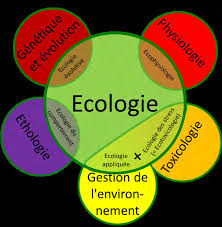
- L'objectif de la matière est de faire comprendre aux étudiants la notion d'écosystème, les facteurs abiotiques et les interactions entres ces facteurs, les composantes de écosystème et son fonctionnement.
- The objective of the course is to help students understand the concept of an ecosystem, abiotic factors and the interactions among these factors, the components of the ecosystem, and how it functions.
- المعلم: MOHAMMED ATHAMNIA
- المعلم: MANEL HAMI
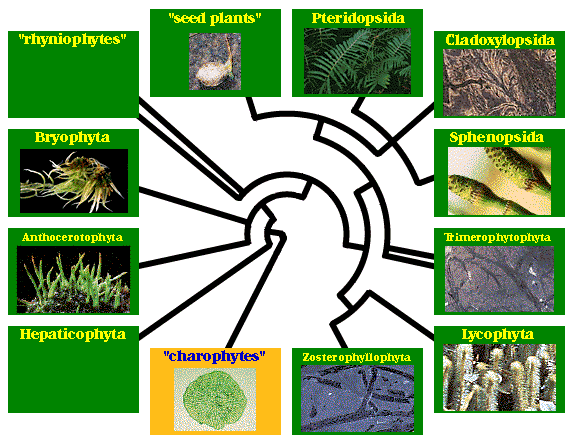
Plant taxonomy is the science of classifying and naming plants, while biosystematics (or experimental taxonomy) is a modern branch of systematics that uses population-level, genetic, ecological, and evolutionary data to understand plant diversity, bridging classical morphology-based taxonomy with dynamic, data-driven insights from molecular biology, genetics, and ecology. Together, they form a comprehensive system for identifying, naming, grouping, and understanding the evolutionary relationships of plants, moving beyond just description to explore species formation and relationships.
- المعلم: Sara CHERIET
Microbiology introduces students to the fundamental principles of microbial life, with emphasis on microorganisms relevant to agriculture, food systems, environment, and biotechnology. This course covers the biology, physiology, ecology, and diversity of microorganisms—including bacteria, archaea, fungi, viruses, and protozoa. Students will develop a strong understanding of microbial structure and function, microbial growth, metabolism, genetics, and interactions with hosts and ecosystems. The practical laboratory component trains students in essential microbiological techniques, including aseptic methods, microbial culture, microscopy, staining, enumeration, and identification of microorganisms.
Learning Objectives
By the end of the course, students will be able to:
-
Understand the structure, diversity, and classification of microorganisms.
-
Explain microbial metabolism, growth, and environmental requirements.
-
Describe microbial genetics and mechanisms of gene transfer.
-
Distinguish between beneficial microbes and microbial pathogens of plants and animals.
-
Apply microbiological techniques for isolation, cultivation, and identification of microorganisms.
-
Assess the importance of microorganisms in food safety, fermentation, and environmental biotechnology.
- المعلم: imane haddidi

Precision agriculture is a set of principles and technologies that enable:
-
Improving the management of agricultural land,
-
Rationalizing the use of inputs and water resources,
-
Achieving better returns on investments.
The course aims to enable the student to:
-
Understand the concepts of precision agriculture,
-
Recognize the importance of maps in decision-making within the agricultural field.
- المعلم: OUARET HEMZA