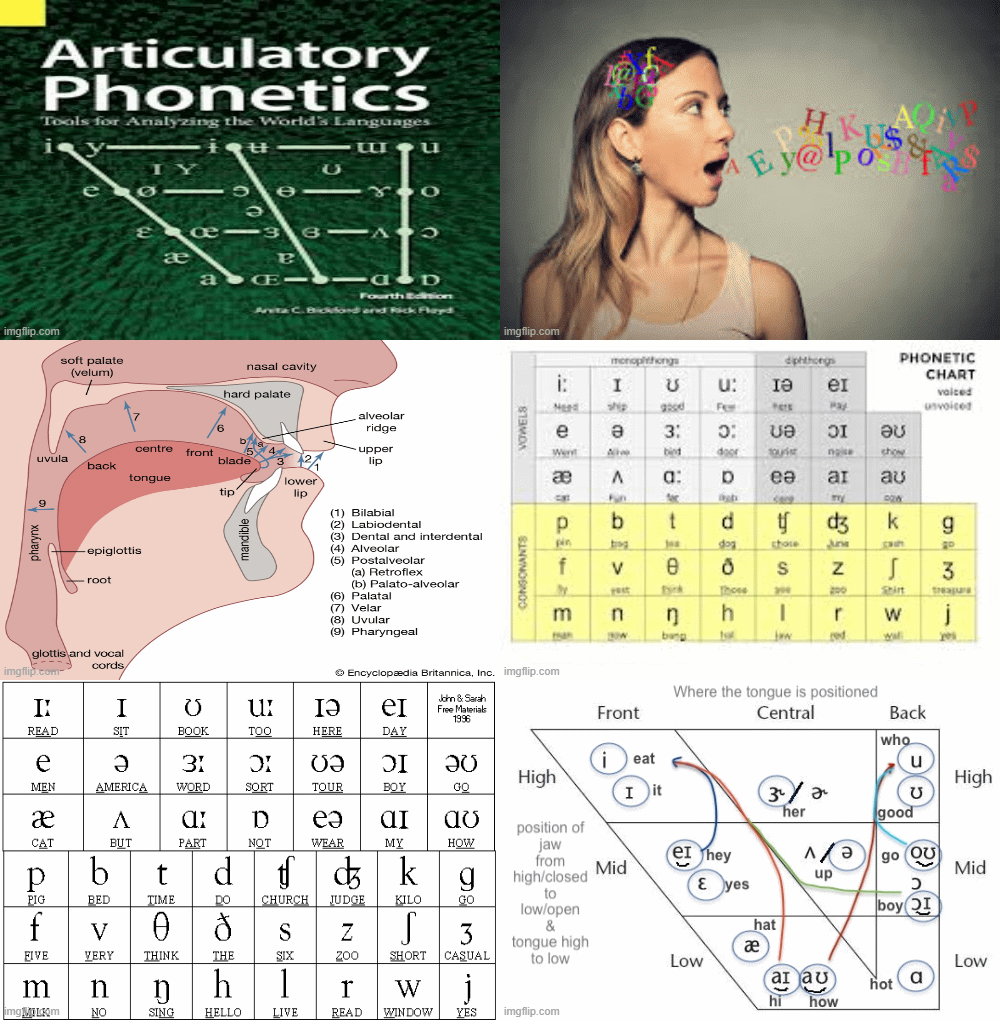
This course introduces the fundamental principles of phonetics and phonology, focusing on how English sounds are produced, classified, and organized within the language system. It begins with the segmental level, covering articulatory phonetics and the description of consonants and vowels, while also addressing allophonic variation, a topic that bridges both phonetics and phonology as it involves the physical realization and the functional distribution of sounds. The course then explores the suprasegmental level, examining connected speech processes such as assimilation, elision, stress, and intonation. Through this progression, students develop a comprehensive understanding of the English sound system and its role in spoken communication.
This course offers a comprehensive introduction to modern literary criticism, tracing the major theoretical approaches that have shaped literary studies in the twentieth and twenty-first centuries. Beginning with foundational movements such as Formalism and New Criticism, the course explores a range of critical perspectives, including Marxism, Structuralism, and Post-Structuralism. It then turns to more contemporary and interdisciplinary approaches such as Psychoanalytic Criticism, Feminist Criticism, Postcolonial Theory, New Historicism, Cultural Studies, Disability Studies, and Ecocriticism. Through theoretical readings and practical applications, students will develop the analytical tools necessary to engage critically with literary texts, situate them within broader cultural and historical contexts, and understand the evolving role of theory in shaping interpretations of literature.
- Teacher: NADJIBA BOUALLEGUE
- Teacher: ilyes gouider

Hello and welcome to the "Communication Practices" course at the University of May, 8th, 1945 - Guelma. This course is delivered by Dr. Khawla BENDJEMIL, and I'm thrilled to guide you on this exciting journey into the world of communication.
This course is designed specifically for first-year Master's students in the English Department, encompassing groups 1 and 2 (Language and Culture) for the first semester of fall 2025.
Our goal is to equip you with essential communication skills that will serve you well in various aspects of your personal and professional life. In today's interconnected world, effective communication is key, and this course will help you unlock the art of communication.
- Teacher: Khawla BENDJEMIL

This Master’s course offers an advanced, interdisciplinary exploration of the historical, political, social, and cultural developments that have shaped the United Kingdom and the United States.. Designed for graduate students in civilisation studies, the course deepens learners’ understanding of how both nations evolved into influential modern states and how their institutions, ideologies, and cultural productions continue to impact global affairs.
- Teacher: AMINA KRIBES