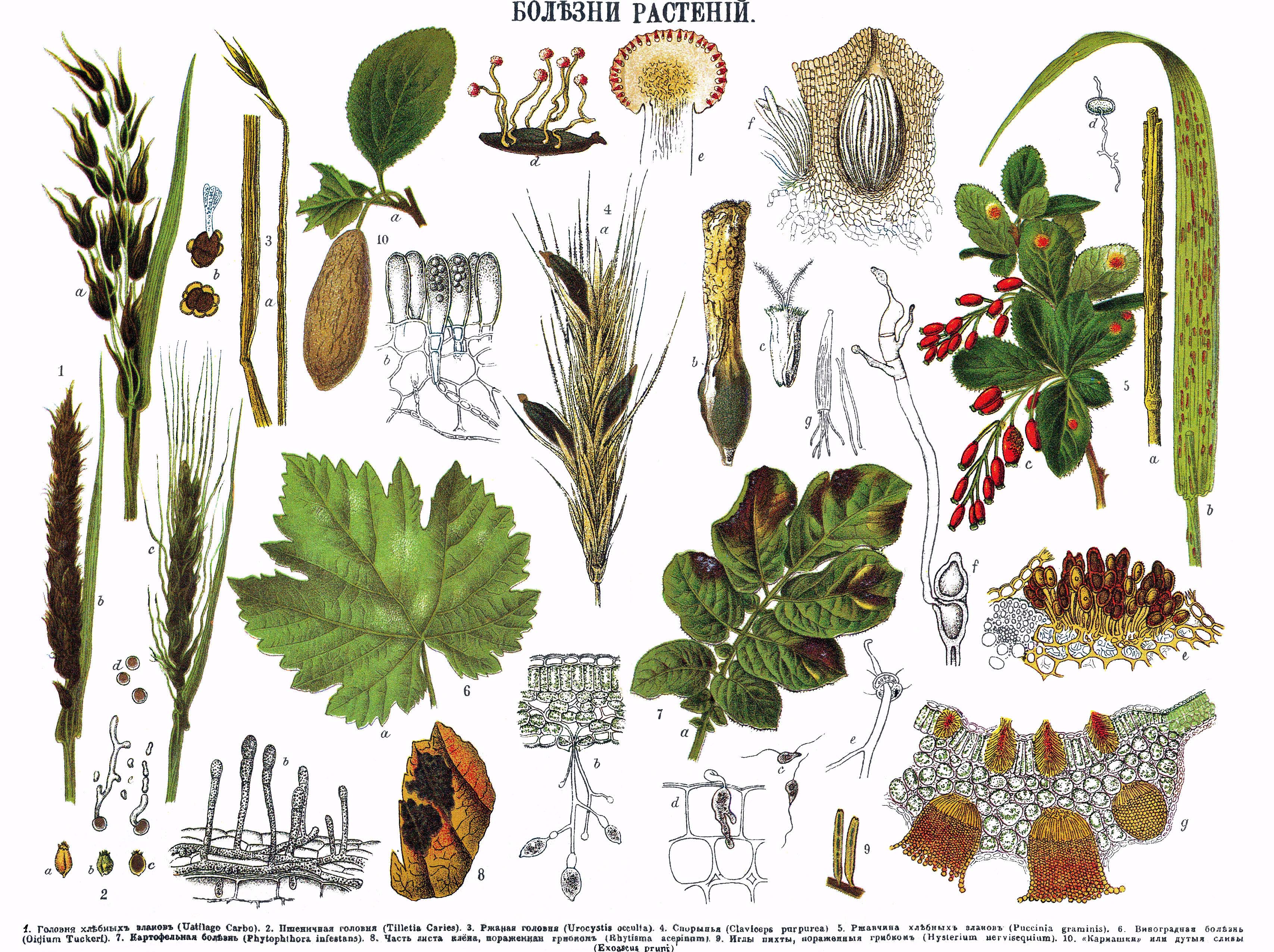
The study of plant disease is covered under the science of Phytopathology, which is
more commonly called Plant Pathology. Plant pathologists study plant diseases caused
by fungi, bacteria. viruses and similar very small microbes (mlos. viroids, etc.),
parasitic plants and nematodes. They also study plant disorders caused by abiotic
problems. or non-living causes, associated with growing conditions. These include
drought and freezing damage. nutrient imbalances, and air pollution damage.
Plant diseases have had profound effects on mankind through the centuries as
evidenced by Biblical references to blasting and mildew of plants. The Greek
philosopher Theophrastus (370-286 BC) was the first to describe maladies of trees,.
cereals and legumes that we today classify as leaf scorch, rots, scab, and cereal rust.
The Romans were also aware of rust diseases of their grain crops. They celebrated
lhe holiday of Robigalia that involved sacrifices of reddish colored dogs and catde in
an attempt to appease the rust god Robigo.
- Enseignant: insaf malek