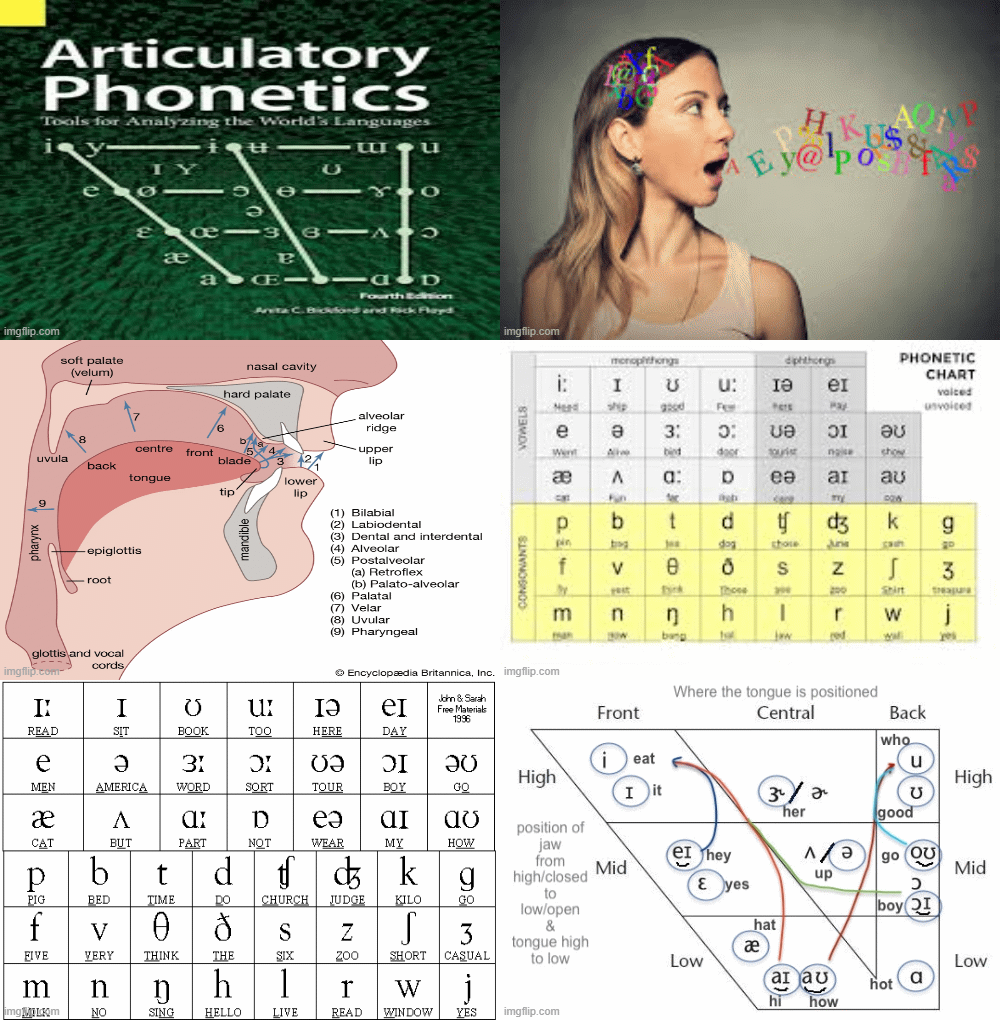
This course introduces the fundamental principles of phonetics and phonology, focusing on how English sounds are produced, classified, and organized within the language system. It begins with the segmental level, covering articulatory phonetics and the description of consonants and vowels, while also addressing allophonic variation, a topic that bridges both phonetics and phonology as it involves the physical realization and the functional distribution of sounds. The course then explores the suprasegmental level, examining connected speech processes such as assimilation, elision, stress, and intonation. Through this progression, students develop a comprehensive understanding of the English sound system and its role in spoken communication.
This course offers a comprehensive introduction to modern literary criticism, tracing the major theoretical approaches that have shaped literary studies in the twentieth and twenty-first centuries. Beginning with foundational movements such as Formalism and New Criticism, the course explores a range of critical perspectives, including Marxism, Structuralism, and Post-Structuralism. It then turns to more contemporary and interdisciplinary approaches such as Psychoanalytic Criticism, Feminist Criticism, Postcolonial Theory, New Historicism, Cultural Studies, Disability Studies, and Ecocriticism. Through theoretical readings and practical applications, students will develop the analytical tools necessary to engage critically with literary texts, situate them within broader cultural and historical contexts, and understand the evolving role of theory in shaping interpretations of literature.
- Enseignant: NADJIBA BOUALLEGUE
- Enseignant: ilyes gouider
- Enseignant: ABDELKRIM DEKHAKHENA

First year Master students at the English Department, University of 8 May 1945-Guelma are exposed to the course of Communication Practices for the second semestre. At this stage, students have already acquired a better understanding of various issues related to communication. The course is meant to enhance and broaden students’ knowledge of topics related to the course. Students are introduced to different theories, principles, and practices of effective human communication, listening, and presentation skills. The course is taught three weeks face-to-face and one week online. The lectures of this course will be in the form of videos that you will have to watch before class and come ready to discuss them.
- Enseignant: Khawla BENDJEMIL
This course introduces students to the post WWII literature in the western world, it scrutinizes the historical period as postmodernity and investigates the literary movement englobing this late capitalist context. Students will understand the historical, philosophical and literacy perspectives characterizing the 50s to 90s in both America and Britain. Studying postmodern playfulness of techniques, students will analyze case studies as Vonnegut's SLH5 and Golding's Lord of the Flies . A Multicultural analysis of this literature will be amplified to study minor literature and ethnic perspectives in the postmodern west.
- Enseignant: MERYEM BOUREGAA