This course is intended for students who wish to gain an initial insight into what research work involves.
It allows students to familiarise themselves with the research environment, from laboratory practice (developing a protocol, technical skills, analysing results) to bibliographic study (research, analysis, synthesis). In addition, the course will enable them to independently present their research work in the form of a written dissertation and a structured oral presentation.
- Teacher: SOUAD KAIDI
This course is intended for students who wish to gain an initial insight into what research work involves.
It allows students to familiarise themselves with the research environment, from laboratory practice (developing a protocol, technical skills, analysing results) to bibliographic study (research, analysis, synthesis). In addition, the course will enable them to independently present their research work in the form of a written dissertation and a structured oral presentation.
- Teacher: SOUAD KAIDI
- Teacher: NASSIMA BENDJAZIA
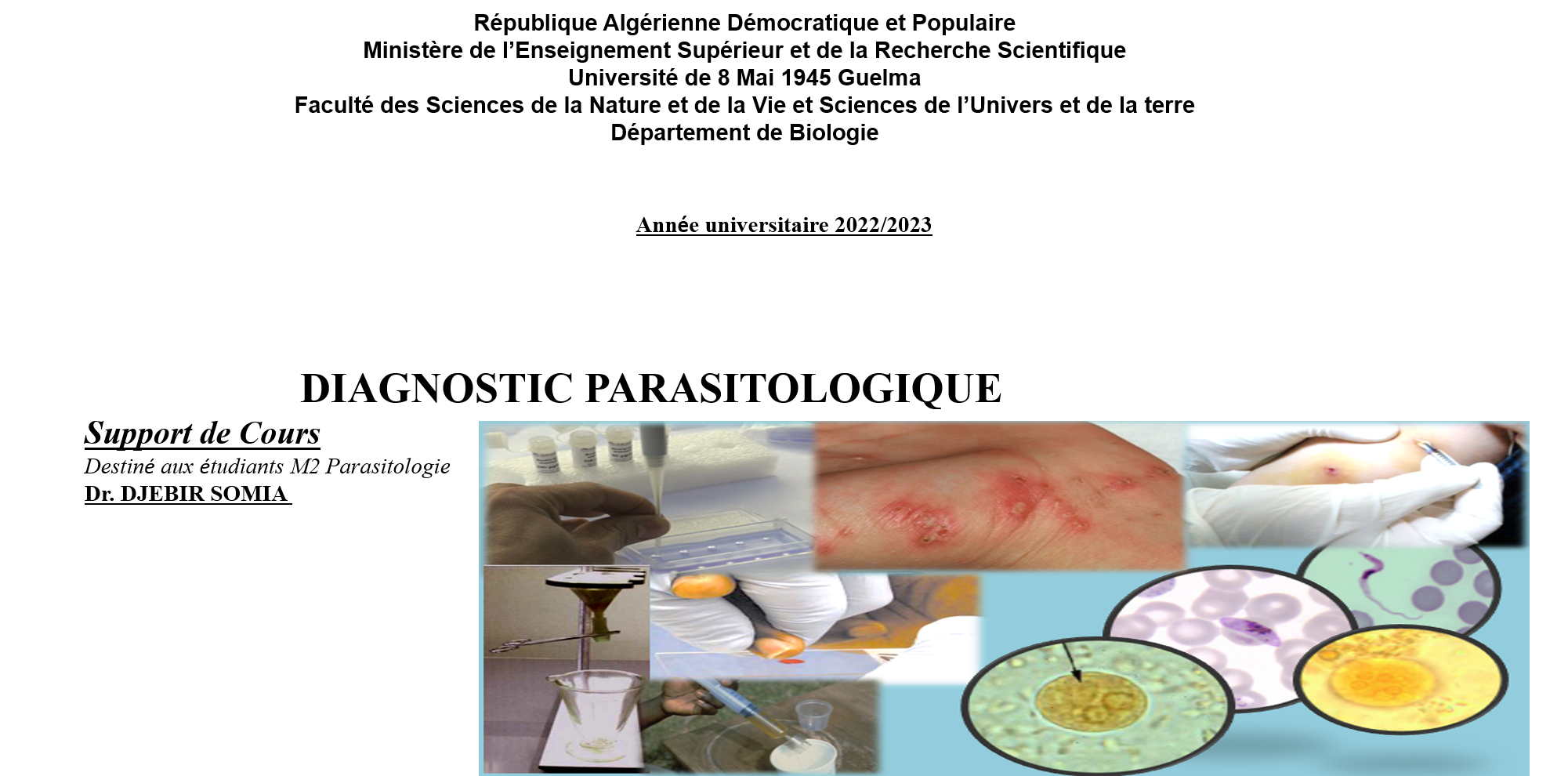
The aim of this course material is to provide future parasitologists, when faced with a sample sent to a parasitology laboratory, with a diagnostic approach to all parasitic diseases affecting humans and animals. This document offers third-semester Master 2 students in Parasitology an overview of all the diagnostic approaches adopted by research laboratories in the field of parasitic disease diagnosis, in order to teach them the various techniques for measuring and analyzing markers of parasitism.
- Teacher: SOMIA DJEBIR